
Connector & hose fixes, $100–$200
The brittle flexible connector behind the cooktop, a small part responsible for an outsized share of leaks.
Gas is the one trade where "pretty confident" is not a standard. Leaks found and repaired, cooktops and heaters connected, lines run and certified: all of it by licensed gasfitters, all of it pressure-tested before the gas goes back on in Burwood.
NSW reserves every gas task, down to connecting an oven, for licensed gasfitters, and the logic is unsentimental: plumbing mistakes stain ceilings, gas mistakes burn houses and poison air. The leaks we attend have a recurring origin story, and it is rarely the pipework’s idea, it is a confident DIY connection or a handyman’s thread tape, discovered later by someone’s nose.
What the licence actually buys is the ending: the whole installation held against a manometer until the needle refuses to move, every appliance checked for a clean blue burn and honest ventilation, and the work done to AS/NZS 5601, the clause your insurer reaches for when something ever goes wrong. Across Burwood and the Inner West, no gas job of ours skips that ending.


The town-centre cafes and food courts push fat and waste into drains that clog fast without regular high-pressure jetting.
Gas in a commercial kitchen is a different regime from a domestic one, interlocked ventilation, larger loads, appliance isolation requirements, and inspection obligations that fall on the operator rather than the plumber.
The practical consequence is that a commercial installation cannot be extended casually. Adding a wok burner changes the load, the ventilation calculation and the certification, and all three have to move together.
Sizing is the quiet failure. Adding an appliance to a line that was adequate for the original load can starve everything else on it, so we check what the existing run can actually carry before extending it.
A period home was not built with gas in mind. Whatever it has was added later, often several times, and the runs take whatever route was available at the time, under floors, through cavities, along the outside of a wall and back in.
Which is why the first job on an older property is usually establishing what is actually there. A pressure test tells you whether the installation is sound; it does not tell you where it goes, and both matter before anything is added.
Putting a gas cooktop where there was not one, or moving an appliance during a renovation, is rarely just plumbing in a block. It usually requires an owners corporation approval, sometimes a by-law, and always correct ventilation and flueing for the space.
With 67.5% of Burwood dwellings recorded as flats or apartments by the ABS 2021 Census, most gas here is a cooktop, a balcony connection or a service running through common property rather than a full house installation.
We will tell you what the work needs before you go to the committee, so the application you submit is the one that gets approved rather than the one that comes back with questions.
For a food business, gas is production. A cooktop out of service is not an inconvenience to schedule around, it is a menu that cannot be served.
Burwood is a busy Inner West hub (postcode 2134), where grand Federation homes sit beside apartment towers and a major shopping centre, bordering Croydon, Strathfield and Enfield. Its mix of period housing and high-density living throws up every kind of drain problem, and we’ve seen them all.
So we carry the common commercial failure parts and we work to your service times rather than ours. Where a part genuinely has to be ordered, you will hear that immediately along with what can be kept running in the meantime.
In a block, the supply to the building and the risers are common property; the pipework and appliances inside your lot are generally yours. Individual meters may sit in a common meter room, which frequently confuses the question of access.
Establish it before arranging work. Anything on common property needs the owners corporation to authorise it, and a plumber cannot simply proceed because a resident asked.
The brittle flexible connector behind the cooktop, a small part responsible for an outsized share of leaks.
Leaking threads and valves sealed properly and proven again under pressure.
Corroded or damaged sections replaced; concealed lines needing access run $800–$2,500.
Connected, tested, certified. Extending a line or adding a bayonet to reach it is quoted on top, fixed, first.
Sydney's 2026 licensed-gasfitter range, call-outs typically $80–$150. The certificate at the end costs nothing extra, it is the job.
Every gas job ends with a pressure test and the paperwork that proves it. Figures here are indicative of the 2026 Sydney market rather than a quote from us, you get your own number as a fixed price before any work starts.
A suspected leak starts with isolation at the meter and ventilation, before diagnosis, before anything. No reading is worth taking on an installation still feeding a leak.
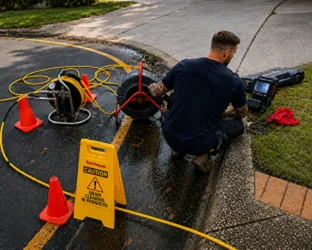
A manometer pressure test tells us the installation is losing gas; gas detection equipment and controlled testing narrow it to the joint, fitting or run responsible.

The failed component or section is replaced, not doped up and hoped over, to AS/NZS 5601, whether that is one connector or a rerun line.
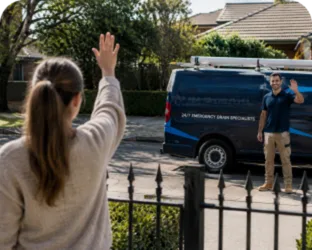
The whole installation holds pressure or the job is not finished. Appliances are relit and checked for correct burning, and you get the compliance side documented.
Cooktop, heater or barbecue point: connected, tested and certified in one visit. The right way costs less than the redo.
Licensed hands, a passing pressure test, and the certificate to prove it. Smelling gas this minute? 131 909 from outside comes before this form.

Leave your details and our local Burwood team will call you back fast.